
Every self storage owner has sat through a vendor pitch promising that new cameras or a fancier gate will let them raise rates. Most of the time, it won’t — because most security spending buys deterrence, not willingness to pay. Tenants expect fencing, lighting, and a gate code as the price of entry. They don’t pay extra for table stakes.
Rent tolerance — what a tenant will accept without balking or shopping elsewhere — moves on a narrower set of upgrades: the ones a tenant can see, feel, and attach to their own unit rather than the property as a whole. The data backs this up, and it points to where security dollars actually convert into rate.
What Tenants Say They’ll Pay For
A 2025 StorageCafe survey of 2,824 renters found price still rules the decision (27% call it the top factor), but 17% named security — cameras, gated access, on-site staff — as the deciding factor in choosing a facility. That’s a meaningful chunk of demand that will trade price sensitivity for a facility that visibly protects their stuff, especially tenants storing furniture, electronics, business inventory, or anything else they’d hate to lose.
The operative word is “visibly.” A facility-wide camera system tenants never notice doesn’t move the needle much — 85% of facilities already have one, so it’s assumed. What moves rent tolerance is security a tenant experiences directly on their own unit.
The Upgrades That Convert to Rate
Individual unit alarms.
Operators discussing this on industry forums consistently report the same thing: tenants will pay a premium for a unit that alerts in real time if someone tampers with their door. It’s a feature they can point to and understand instantly — “my unit has its own alarm” is a much easier sell than “the property has cameras.”
Smart locks and mobile access.
These work as a premium-tier play rather than a blanket upgrade. Rather than retrofitting an entire facility, operators are deploying smart locks on climate-controlled units, drive-up premium rows, or a dedicated high-security wing, then pricing that tier above standard units. The lock becomes the reason for the price gap, not an afterthought bundled into it. Mobile app gate access has grown 45% over the past three years, and roughly 80% of tenants now expect contactless, 24/7 entry on their own schedule — which means smart access is shifting from differentiator to expectation, but it’s still a premium lever in markets where competitors haven’t caught up.
AI-enabled cameras with real monitoring.
The camera itself is table stakes; what a tenant will pay for is the assurance that footage is actually watched, retained, and actionable — AI-flagged alerts, remote monitoring tied to a real response, footage tenants can request if something goes missing. Marketing “monitored” security, not just “recorded” security, is what separates a rate premium from a compliance checkbox.
Gated access paired with keypad or card entry tied to individual tenants.
Not gates alone — gates that log who came and went, and that a tenant experiences as personal rather than generic.
What Doesn’t Move Rent Tolerance
Perimeter fencing, general lighting, and a shared facility camera system are baseline expectations now, not premiums. Spend on them protects the asset and reduces liability and insurance exposure, which matters — but don’t expect to price them into a rate increase. Tenants have come to assume these exist; charging more for having them reads as opportunistic rather than value-adding, and it shows up in review complaints and elevated move-out rates instead of NOI.
The distinction for owners: security spending falls into two buckets. One protects the asset and reduces risk (fencing, lighting, base cameras) — underwrite it as a cost of doing business. The other creates a tenant-facing amenity tied to an individual unit or experience (alarms, smart locks, monitored cameras, mobile entry) — underwrite that as a revenue lever with its own pricing tier.
Putting It Into a Pricing Strategy
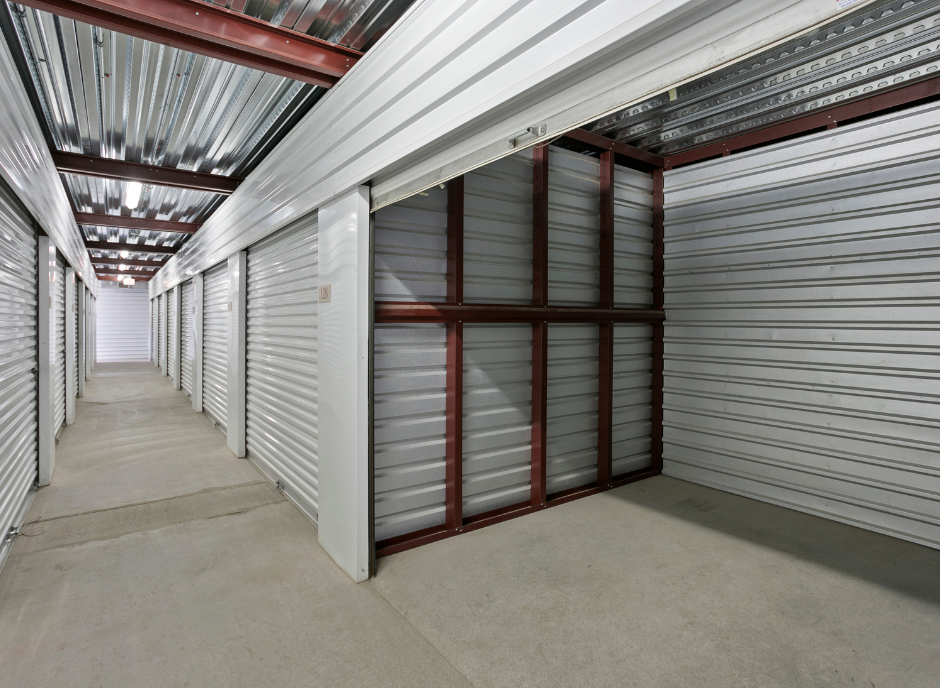
The operators seeing the best results aren’t converting whole facilities — they’re segmenting. A security-tier or “protected” row of units, priced $10–$40 above standard depending on market, gives tenants a real choice and gives management a clean upsell at move-in and renewal. It also gives a facility a marketing story that goes beyond price-per-square-foot, which matters in markets where storage supply has caught up with demand and competing purely on rate is a losing game.
There’s a secondary benefit worth underwriting separately: integrated mobile access, smart locks, and automated payments have been reported to cut on-site labor costs by as much as 25%. That’s not a rent story, but it’s real margin, and it makes the capex case for these upgrades easier to close even before the rate premium shows up.
Why This Matters for Investors
For anyone underwriting an acquisition or a value-add plan, this distinction changes how you read a seller’s security capex. A facility that spent heavily on fencing and floodlights but has no tenant-facing security tier has spent money without building a revenue lever — that capex doesn’t show up as a rate story in your pro forma. A facility with individual unit alarms, a smart-lock tier, or monitored cameras already has a segment of tenants trained to pay a premium, which is a much easier rent bump to model and defend at refinance or exit than a blanket rate increase across the whole tenant base.
The bottom line: security spending only increases rent tolerance when the tenant can see it, and it belongs to their unit. Everything else is a cost of doing business — necessary, but not a pricing strategy.
If you need a partner to walk through optimization for you business, don't hesitate to reach out to The Gorden Group. Or if you need a valuation of your current property with or without these implimentations, request valuation today.
Sources
• 1 In 3 Americans Rent Self Storage In 2025 As Demand Expands — StorageCafe
• Self-Storage Operators Discuss Benefits of Individual Unit Alarms — Inside Self-Storage
• Access Control for Self Storage: 2026 Guide — Coram AI
• Storage Facility Security Checklist for 2026 — StorageOwnerAdvisor