For the last five years, the self-storage industry has been riding a wave of capital inflows, construction booms, and investor confidence. New supply has poured into markets across the country—Arizona, Nevada, Utah included. But supply growth has a ceiling. When it hits, the operators who built their unit economics around perpetual scarcity wake up to a new reality: occupancy pressure, rate stagnation, and NOI erosion that no operational tweak can fully reverse.
We're not predicting overbuild. We're watching it happen in real time. And for owners thinking about their exit window, the math is changing fast.
How Overbuilding Actually Happens
Overbuild doesn't occur overnight. It's the compounding result of rational individual decisions that, in aggregate, become irrational. Developers see favorable market conditions—stable occupancy rates, modest supply gaps, strong new business migration to secondary markets—and they underestimate how many of their competitors are seeing the exact same thing.
By the time new supply actually comes online, it's too late to stop. Shovels are in the ground. Financing is locked. And the market has moved from undersupplied to oversupplied between financing and ribbon-cutting.
The metrics that signal trouble are specific:
This is the self-storage version of musical chairs. It works fine until the music stops and there aren't enough seats.
Arizona, Nevada, and Utah: Local Supply Surge
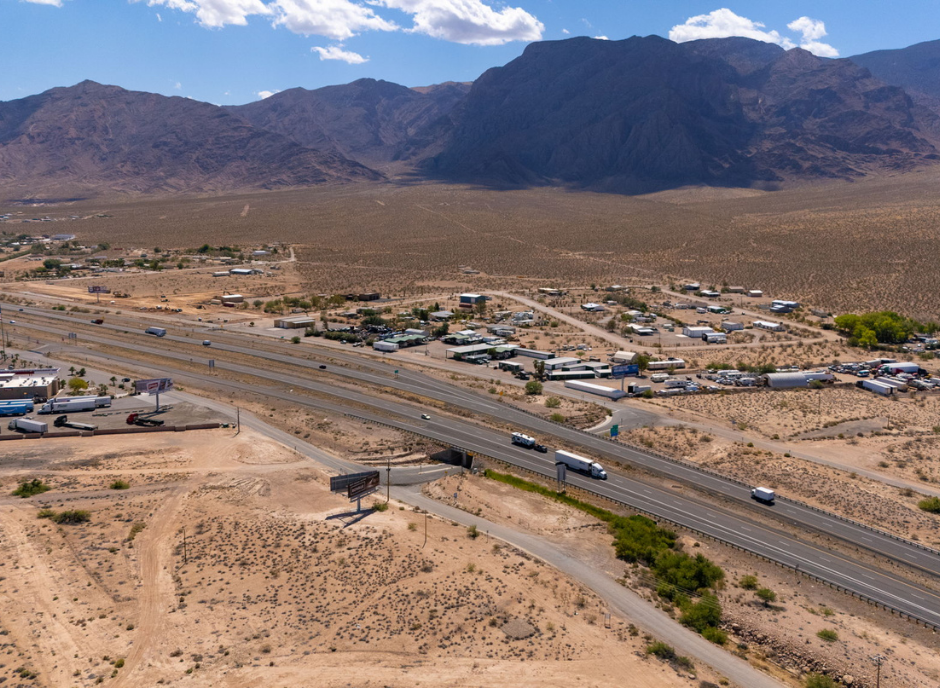
The Southwest has been a magnet for storage development. Professional operators, REITs, institutional capital, and local developers have all been betting on continued population migration and undersupplied markets. The result: unprecedented levels of new storage coming online simultaneously.
Arizona has seen projects announced and under construction across Phoenix metro, Tucson, and secondary corridors. Add in conversion projects from older retail, and the total new square footage hitting the market will be substantial. Occupancy rates that were 92–95% two years ago are now drifting into the mid-to-high 80s in saturated submarkets.
Nevada, particularly Las Vegas and Reno, has experienced similar construction velocity. Capital has flowed in, banks have financed aggressively, and operators have expanded. The Las Vegas market specifically is bracing for noticeable supply absorption pressure over the next 18 months.
Utah remains relatively undersupplied in certain pockets, but the corridor from Salt Lake to Provo has also seen meaningful new development. Secondary markets like St. George have become construction sites.
For owners in these markets, the window between healthy market conditions and compressed margins is narrowing. The operators who built models assuming perpetual tight supply are about to learn otherwise.
The Real Financial Impact on Operating Assets
When supply catches up, the financial impact hits operators in sequence:
Month 1–6: Occupancy pressure. New competing properties—often newer, well-capitalized, with better amenities—absorb move-ins that would have gone to you. Your occupancy declines 1–3 percentage points. You don't notice it in revenue yet because you're still raising rates on in-place tenants. But the new customers you're missing? They matter.
Month 6–12: Rate growth stalls. You try to push rents 4%, but new tenants demand concessions. Existing tenants see the market and resist increases. Year-over-year rate growth drops to 1–2%. For properties that depended on rent escalation to drive NOI, this is a shock.
Month 12–24: Margin compression. Occupancy settles 3–5 points lower. Effective rate growth is flat or negative. Your revenue is down 3–8% on a same-store basis. Operating expenses don't fall proportionally—payroll, insurance, and utilities are sticky. Your NOI margin, which was a healthy 50–55%, is now 45–50%. Cap rate compression is real.
Year 3+: Unit economics deteriorate. The property that looked like a 5.5% cap rate in stabilization now yields 4.8% on realistic assumptions. If you're carrying debt, debt service coverage ratios tighten. Refinance options disappear. Exit timing becomes urgent.
This isn't catastrophic if you own best-in-class assets with operational leverage, but for mid-market operators with competent but not exceptional properties in newly saturated markets, the pressure is relentless.
The Developer Delusion: Why Overbuilding Is Attractive
The irony of overbuilding is that it's built on optimism, not malice. Developers and their lenders aren't trying to destroy value. They're making rational decisions under uncertainty:
What they didn't account for: everyone else financed at the same time with the same assumptions. When 15 developers are building the same property in the same market with the same timeline, you don't get 15 winning projects. You get one good one and 14 that underperform.
The math works if supply remains constrained. It breaks when supply becomes abundant. By the time supply is abundant, the new units are already built.
What Savvy Operators Are Doing Now
Experienced owners recognize this cycle. They're taking defensive action while they still can:
Operational excellence becomes the moat. When rates can't grow, operational efficiency drives margins. This means best-in-class unit condition, premium amenities that command rate premiums, and tenant retention programs that reduce turnover (which is expensive in tight markets). It means having the best property in an average market beats having an average property in a good market.
Pricing discipline. Rather than chase occupancy, the smartest operators are holding rates and accepting modest occupancy declines. A property at 88% occupancy at $120/unit beats 92% occupancy at $105/unit. You preserve pricing integrity for the future and avoid the concession trap.
Yield management and unit mix optimization. Understanding which unit types, sizes, and price points have the most inelastic demand lets you focus selling effort on highest-margin units. You're not filling every unit; you're filling the right units.
Strategic 1031 exchanges. Owners in saturated markets are realizing their exit window is now, not three years from now. They're swapping out of markets with visible oversupply into secondary or emerging markets with structural supply constraints. This locks in value before cap rate compression accelerates.
Debt paydown or refinancing while rates are still favorable. A property that looked like a mortgage candidate two years ago may not refinance in three years if cap rates have compressed 75–150 basis points. Savvy operators are securing debt now while lenders are still willing to finance at rates that make sense.
The Broker's Vantage Point
We sit at the intersection of buyer interest, seller urgency, and market reality. From our vantage point, here's what we're seeing:
Owners who financed during the last wave of construction are beginning to recognize that their exit assumptions were built on market conditions that no longer exist. The deals they thought would be "stabilize and hold" plays are now actively under pressure. IRRs are tracking 200–300 basis points below underwriting. Refinance options are disappearing.
Meanwhile, institutional capital and secondary buyers are still active—but they're more selective. They want best-in-class assets in strong markets, or they want value-add opportunities where operational improvement can drive yield. They're not interested in core-core boxes in over-supplied markets at cap rates that don't compensate for occupancy risk.
This creates an opportunity for sellers who act decisively. The owner who lists now, while markets are still functioning and buyer demand is robust, has optionality. The owner who waits 12–18 months hoping the market stabilizes will be selling into a buyer's market where cap rate compression is already priced in.
The Path Forward: Exit Timing Matters
The biggest mistake we see owners make during overbuild cycles is passive waiting. They assume the market will bounce back, that demand will eventually absorb supply, and that their property will find its footing. Sometimes it does. Often it doesn't—not at the economics they underwritten for.
The strategic move is to ask hard questions about your property's position right now:
This isn't pessimism. It's realism. Overbuild cycles happen in every real estate sector. The owners who navigate them successfully are the ones who see them early and act decisively. Waiting for the market to improve costs you cap rate compression, lost exit windows, and eroded returns.
We're Here to Help You Navigate It
At Gorden Group, we've seen multiple supply cycles. We've watched properties through overbuild, stabilization, and maturity. We work with owners to understand where their assets stand in the cycle and what the realistic options are—whether that's hold and optimize, reposition through capital investment, or exit strategically while conditions are favorable.
If you're concerned about where your property sits in the market, or if you're wondering whether your exit assumptions still make sense, let's talk. Connect with the Gorden Group The data tells a story. We can help you understand what yours is saying.
The cost of overbuilding isn't just in the statistics. It's in the NOI compression, the cap rate pressure, and the owners who waited too long to make a move. Don't be that owner. Reach out and let's review your situation.