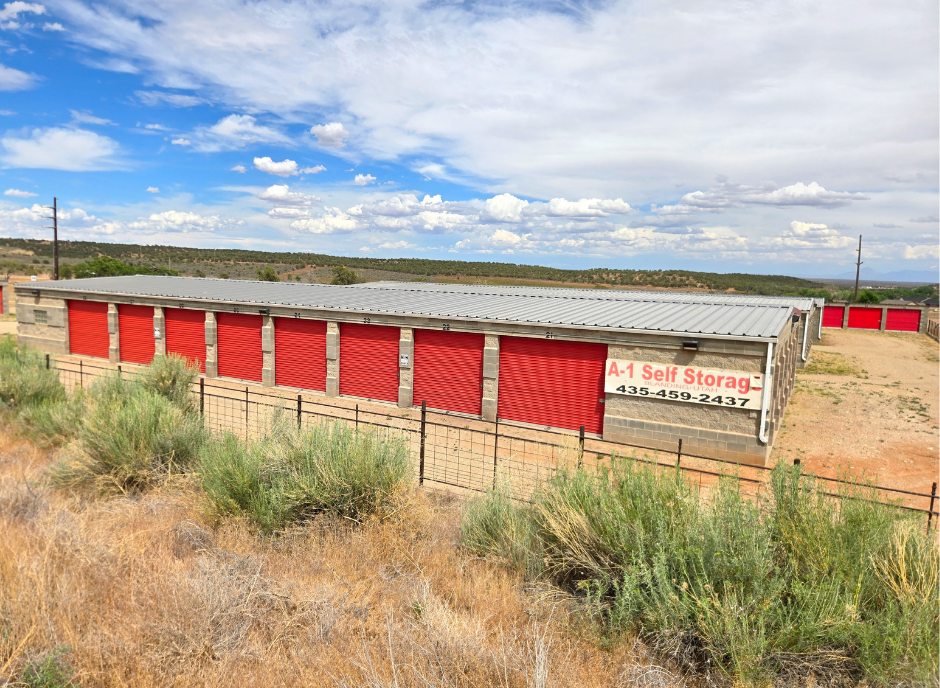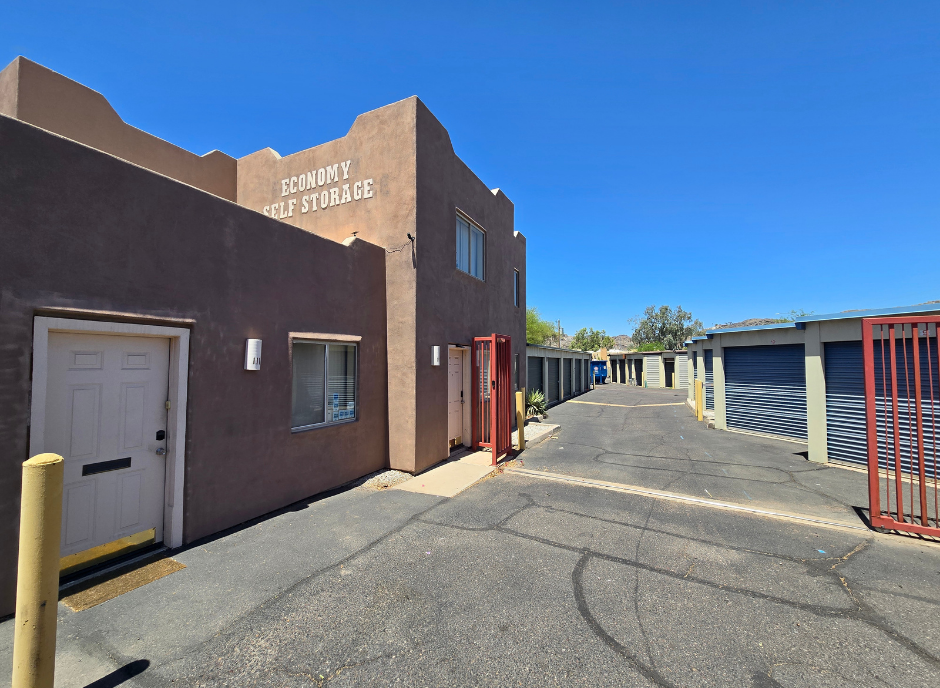

Two self-storage facilities open in the same market during the same economic cycle. One reaches 85% occupancy in four months. The other takes fourteen.
The difference isn't luck. It's not market timing either—not entirely. What separates fast-leasing facilities from the struggling ones is a collision of operational fundamentals, pricing discipline, and marketing execution that most owners don't recognize until it's too late.
In the Southwest market, where new supply continues to pressure existing assets and owner-operators juggle tighter margins, lease-up speed has become a leading indicator of long-term value. Fast lease-ups signal strong asset-market fit. Slow ones expose problems that compound quarterly.
The Physical Stuff Matters—But It's Not Everything
Location is table stakes, yes. But within the same submarket, the variance in lease-up speed reveals something more granular: unit mix alignment.
A facility stacked with 10x10 and climate-controlled units in a market dominated by smaller, price-sensitive renters will move inventory slower. An operator who read the tenant demand data correctly—smaller unit prevalence, outdoor storage demand, boat and RV capacity—fills faster, even if the facility is newer and slightly more expensive.
This is where observation compounds. When Gorden Group moves through a market evaluating inventory, we see which facilities consistently have waiting lists for specific unit types and which have dead space. That asymmetry predicts lease-up speed months before it shows in trailing 12-month data.
Condition and amenities accelerate lease-up within reason. Climate-controlled hallways, gate technology, digital access, and preventive maintenance create perceived value that renters translate into occupancy decisions. But there's a ceiling: a pristine facility in a secondary location, managed by an operator indifferent to price optimization, still leaks velocity.
Pricing Strategy Is Where Most Owners Lose
Here's the pattern we observe: a new facility opens. The operator sets a market-based rate for a 10x10. Demand is soft initially—normal. Instead of adjusting, the operator holds firm, assuming that consistency signals professionalism.
Meanwhile, down the street, the competitor is dynamic. They're testing $10 higher on climate units while offering move-in specials on ground-floor outdoor storage. They're segmenting by unit type and customer profile rather than setting one rate and hoping for velocity.
Fast lease-ups typically come from operators who understand their rent roster data in real time. They see which units move fast (often the 5x10s and the high-end climate), which sit (sometimes the mid-tier 10x15s), and they price accordingly. This isn't discounting to desperation; it's yield management.
Operators with management software integration—rent roll snapshots, dynamic pricing dashboards, occupancy velocity tracking—move renters faster because they can spot the inflection point where rate cuts accelerate occupancy faster than they erode NOI.
Facility operators obsessing over a $100 per month hold-the-line strategy often miss the $15,000 opportunity cost of a vacant 10x10 for six months.
Marketing and the Brand Problem
A fast-leasing facility isn't always the most beautiful. It's usually the most visible.
In Arizona, Nevada, and Utah, where self-storage has become competitive enough to spawn local search behavior, facilities that dominate Google My Business, maintain current photos, respond to reviews, and run targeted digital campaigns fill faster. Not because they're fundamentally better, but because renters find them first.
Slow-leasing facilities often inhabit a marketing dead zone: the owner expects word-of-mouth and broker relationships to carry the load, but they haven't optimized for digital discovery. The website is stale. The facility photos predate the last renovation. The Google listing hasn't been updated in months.
This is especially true in secondary markets and suburbs where renters are less likely to have an existing relationship with the property. For those renters, the first five Google results are the market.
Operators who leak lease-up speed often discover late that their marketing spend is misaligned. They're running local radio spots while their Facebook presence is dormant. They're mailing postcards to neighborhoods with declining household formation. They're not tracking which channels actually source renters.
Management Quality and Operational Rigor
Fast lease-ups correlate with responsive, detail-oriented management. When a prospect tours or inquires, there's follow-up within hours, not days. When a unit sits vacant, the operator is asking why, not assuming it will fill eventually.
Slow lease-ups correlate with management drift: tours scheduled inconsistently, follow-up inconsistent, occupancy reports treated as backward-looking rather than predictive. The operator reacts to the market instead of reading it.
In conversations with facility managers across the region, the ones managing fast lease-ups are typically tracking:
Weekly occupancy gains by unit type
Lead source performance (Google, broker, referral, etc.)
Tour-to-lease conversion rates
Marketing spend per occupied unit
Competitive rate monitoring
The ones managing slow lease-ups are checking the occupancy percent once a month and hoping it improves.
What This Means for Owners and Sellers
If you own a facility that's leasing slowly, the good news is that lease-up speed is partially reversible. A ruthless review of pricing, a marketing audit, and management accountability can accelerate occupancy and NOI.
If you're selling, lease-up speed is a valuation signal buyers are watching hard. A facility with fast, predictable lease-up velocity—documented by historical occupancy trajectory—commands premium pricing and attracts institutional capital. One still ramping after a year signals operational or asset-market mismatch that buyers discount heavily.
For prospective buyers and 1031 exchange investors, lease-up speed history is a leading indicator of the seller's operational discipline and the property's true market position. It tells you whether the seller was managing actively or managing by default.
The Broker Vantage Point
What we see from the brokerage desk is that the gap between fast and slow lease-ups is widening. Operators with systems, pricing discipline, and marketing savvy are filling facilities faster and at stronger rates. Operators relying on passivity and market assumptions are struggling more.
This isn't because the Southwest market is tightening uniformly. It's because excellence in facility operation and marketing has become table stakes. Renters have choices, and they're choosing based on digital discoverability, pricing fairness, and responsive management.
If your facility is leasing slower than your comps, the answer lies in one of these areas: unit mix misalignment, pricing inflexibility, marketing blindness, or management execution. Identifying which one—and correcting it—is the difference between a recovery and a slow bleed into sale under pressure.
The fastest lease-ups in our market share one trait: the operator is obsessed with occupancy velocity as a leading indicator of health, not a lagging one. They're measuring weekly, adjusting daily, and iterating on strategy continuously.
Everyone else is hoping it works out.
That's the story lease-up speed tells.
If you're evaluating your facility's lease-up performance, or timing a sale and wondering how to position an asset in a competitive buyer environment, the Gorden Group works with owners across Arizona, Nevada, and Utah to identify operational and strategic gaps. Let's talk about what your data is telling you. Connect with the Gorden Group
Request a property valuation