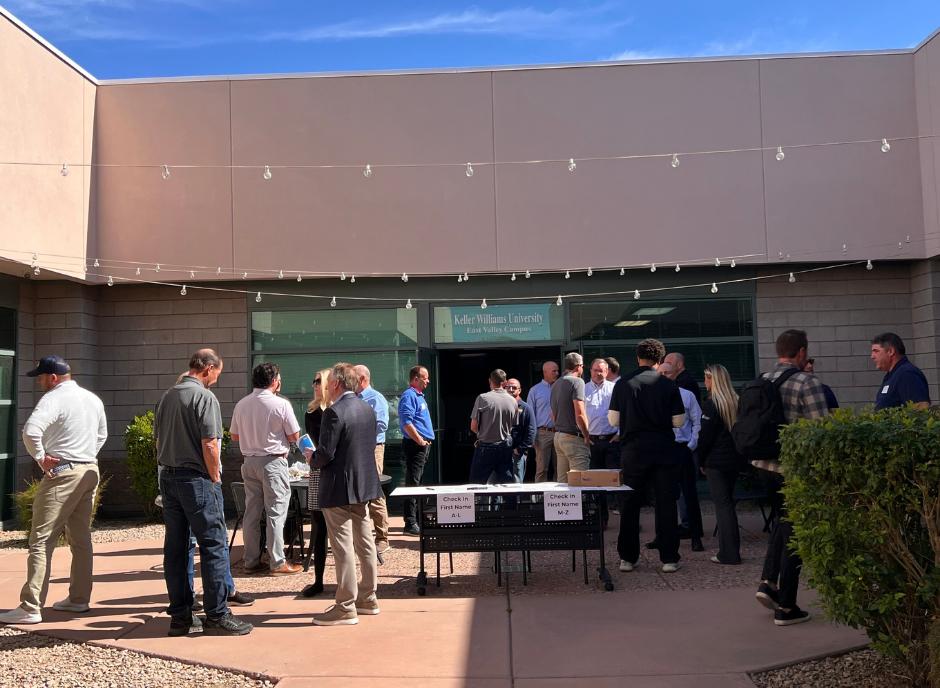
If you were in the room for our 2026 Lunch & Learn, you felt it: the self-storage conversation has shifted.
The theme running through every presentation was simple: today’s market is rewarding durability, discipline, and transparency. The “easy button” years—when growth assumptions could carry the underwriting—are behind us. Appraisers, lenders, and buyers are still active, but they’re asking sharper questions and running tighter stress tests. The good news? Operators who understand the new rules (and build systems to win under them) are positioned to outperform.
Here are the highlights and the connecting points from each presenter, and what they collectively say about where storage is headed next.
The new market lens: “Durable NOI” beats “promotional NOI”
Jeff Gorden: How we got here, and what’s different now
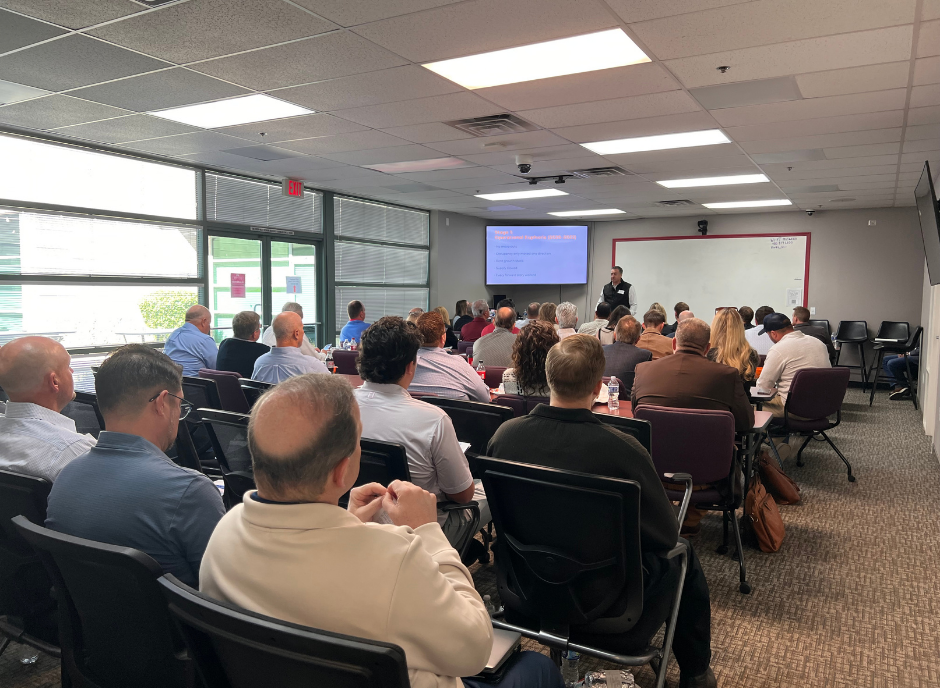
Jeff opened by walking through the cycle that created today’s reset—two back-to-back “euphorias” that rewired expectations:
1) Operational euphoria
During the pandemic period, move-outs dropped, occupancies climbed, rents surged, and supply paused. Storage felt bulletproof and every forward projection “worked” because customers were unusually sticky and pricing power was high.
2) Development euphoria
That operational momentum spilled into aggressive new construction underwriting. The assumptions got… ambitious: peak rents, peak velocity, and even exit cap rates below entry cap rates. Lease-ups were routinely modeled at “perfect execution” pace.
Then the music stopped.
Debt costs jumped, loan sizing became cash-flow driven, operating expenses rose (taxes, insurance, marketing), and street rates softened—often slipping below in-place rents. In Jeff’s words, it created the industry’s “hangover.”
But Jeff’s most important takeaway wasn’t about what broke—it was about what buyers now value:
Buyers are stress-testing the rent roll
In today’s environment, occupancy and NOI alone aren’t enough. Buyers are digging into the rent roll to see if cash flow is real or propped up by concessions.
Jeff illustrated this with the contrast between two $1M NOI facilities:
On paper, both produce the same NOI. In reality, one is far more valuable because it’s durable—it won’t collapse the moment you try to normalize rates.
That’s the market’s big pivot: buyers are underwriting “what happens when promos end?”
Promotions, rate strategy, and the risk of backlash
The Q&A hit a real operator challenge: if competitors offer $1 move-in deals and deep concessions, do you have to play along?
Jeff’s operator-to-operator advice was balanced:
He also raised a forward-looking concern: aggressive, rapid rent increases from low introductory rates can feel like “bait and switch,” raising reputational and even regulatory risk.
Where we are now: stabilization, not breakout
Jeff framed today as stabilization—not a new boom—marked by selective liquidity, slowly tapering supply, and more cash-flow based lending. The recovery path, he noted, is likely tied to:
His closing line landed: we’re not going back to the party, but we’re not staying hungover either.
Appraisal reality: the “data gap” matters more than ever
Jeff Shouse: The valuation and underwriting reset (with real market data)

Jeff Shouse brought the data—and a framework appraisers live by: SWOT analysis (Strengths, Weaknesses, Opportunities, Threats). His core message: stabilized, well-run storage is still a favorite asset class, but the market is drawing a hard line between stabilized performance and “early story” projections.
Strength: Storage is still one of the most resilient asset classes
Jeff emphasized that self-storage has outperformed other major property types over multiple time horizons. One proof point he cited: distressed assets coming due are meaningfully higher across many property types, while self-storage remains comparatively low.
Why? The discussion pointed to a few drivers:
Weakness: C of O deals and early lease-ups are facing restraint
The market’s sharpest pullback is happening in:
Jeff reinforced what buyers are showing through behavior: replacement cost arguments are less persuasive right now than conservative discounted cash flow underwriting. Appraisers are modeling rent growth more cautiously than the last cycle, and lease-up timelines are more realistic—often shifting from “2–3 years” thinking to “3–4 years,” plus time for rate normalization.
The key appraisal takeaway: “asking” ≠ “actual”
One of the most practical points Jeff made: there can be a meaningful spread between:
If valuations rely on surface-level pricing, they can dramatically misread performance. This is why credible appraisal work leans on verified collections and real comps—not just website rates.
Expense watchlist: the three categories investors can’t ignore
Jeff also highlighted the expense buckets that keep showing up in underwriting:
One particularly important lending note: container units not affixed to the ground may be treated as personal property, and some major lenders won’t underwrite them the same way. The practical advice: address this early—don’t let it surprise your loan sizing at the eleventh hour.
Cap rates: tight range, but tied to risk
Jeff noted that cap rates nationally have remained in a relatively tight band compared to other property types, with the key driver being risk—especially for lease-up assets in saturated markets. More nearby supply = more conservative underwriting.
And he offered a clear macro point: even small interest rate moves can release a lot of sidelined capital. If debt conditions loosen, activity can accelerate quickly.
Operations and tech: underwriting now includes security, data, and design choices
John Bilton: Building and operating for the market that exists (not the one we wish existed)
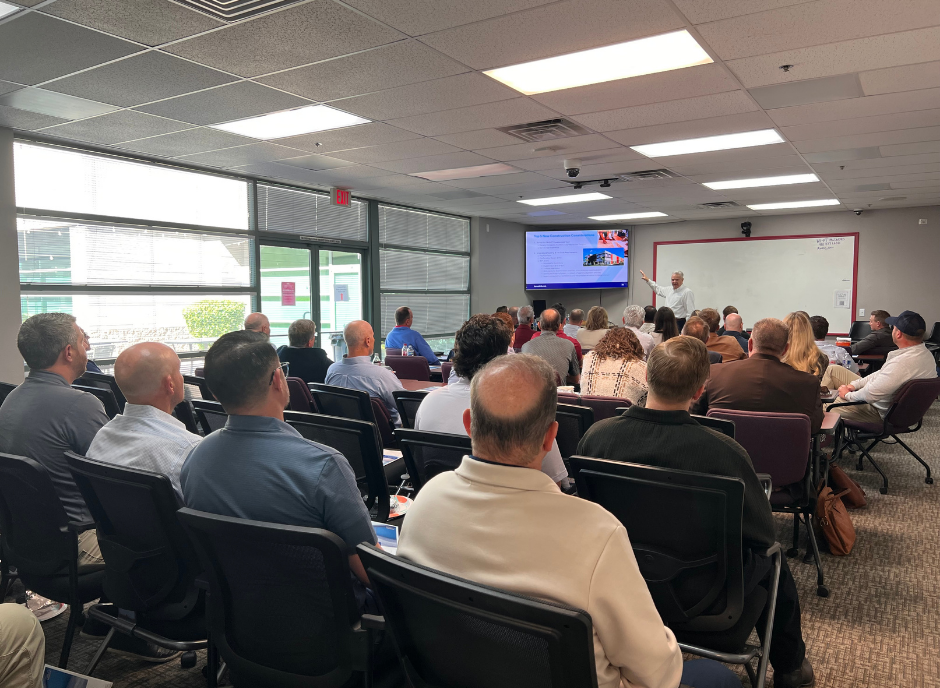
John’s presentation connected underwriting to real-world operational realities—particularly for new construction and modernized facilities. His message was direct: storage isn’t “just a metal box with a roll-up door.” In today’s environment, execution details can materially change outcomes.
Build it right: avoid expensive surprises
He emphasized planning essentials that routinely impact timeline and budget:
The throughline: if you want the asset to be viable for 20–40 years, you have to future-proof it.
Security is no longer optional—it’s reputational and financial
John shared industry survey findings and operator examples showing that theft and break-ins:
His story about an attempted break-in that failed made the point: sometimes a “costly” upgrade is cheap compared to the downstream damage.
The tech shift: smart locks, hardened doors, and data as an asset
John highlighted how modern upgrades are evolving from “nice-to-have” to “value drivers,” including:
He also connected this to insurance economics:
The common thread here ties back to “durable NOI”: reducing incidents, reducing claims, protecting reputation, and improving operational control all support more dependable cash flow—and that’s exactly what buyers and lenders want right now.
The connective tissue: what all three talks said together
Even though each speaker focused on a different lens—brokerage/cycle, appraisal/data, construction/operations—the connecting points were remarkably consistent:
1) Underwriting has shifted from “hope” to “proof”
The market is demanding verified performance and realistic forecasts:
2) Promotions can win occupancy but weaken exit value
Concession-heavy rent rolls are being discounted in value because buyers worry about:
3) The “quality of NOI” matters as much as the amount
Durable NOI—supported by rate discipline, stable tenants, controlled expenses, and strong operations—wins in today’s market.
4) Technology is becoming part of valuation logic
Security, automation, and data visibility aren’t just operational upgrades anymore—they influence risk, insurance exposure, tenant experience, and management scalability.
5) The winners will be disciplined operators
The party years rewarded aggressive projection. The next phase rewards:
Final thought: the industry is still strong—just smarter
If you zoom out, this wasn’t a “doom and gloom” event at all. It was a reality check—and a roadmap.
Self-storage remains resilient, but it’s entering a phase where the best operators will earn growth, not assume it. And the market is still paying premiums for assets that demonstrate stability, discipline, and operational strength.
We’ll be sharing additional resources and takeaways in the coming weeks. In the meantime, if you’d like to talk through how these themes apply to a specific asset—whether you’re holding, refinancing, building, or exploring an exit—we’d love to connect.
NOI to Exit: What Appraisers, Lenders, and Buyers Are Watching in Self-Storage Right Now
If you were in the room for our 2026 Lunch & Learn, you felt it: the self-storage conversation has shifted.
The theme running through every presentation was simple: today’s market is rewarding durability, discipline, and transparency. The “easy button” years—when growth assumptions could carry the underwriting—are behind us. Appraisers, lenders, and buyers are still active, but they’re asking sharper questions and running tighter stress tests. The good news? Operators who understand the new rules (and build systems to win under them) are positioned to outperform.
Here are the highlights and the connecting points from each presenter, and what they collectively say about where storage is headed next.
The new market lens: “Durable NOI” beats “promotional NOI”
Jeff Gorden: How we got here, and what’s different now
Jeff opened by walking through the cycle that created today’s reset—two back-to-back “euphorias” that rewired expectations:
1) Operational euphoria
During the pandemic period, move-outs dropped, occupancies climbed, rents surged, and supply paused. Storage felt bulletproof and every forward projection “worked” because customers were unusually sticky and pricing power was high.
2) Development euphoria
That operational momentum spilled into aggressive new construction underwriting. The assumptions got… ambitious: peak rents, peak velocity, and even exit cap rates below entry cap rates. Lease-ups were routinely modeled at “perfect execution” pace.
Then the music stopped.
Debt costs jumped, loan sizing became cash-flow driven, operating expenses rose (taxes, insurance, marketing), and street rates softened—often slipping below in-place rents. In Jeff’s words, it created the industry’s “hangover.”
But Jeff’s most important takeaway wasn’t about what broke—it was about what buyers now value:
Buyers are stress-testing the rent roll
In today’s environment, occupancy and NOI alone aren’t enough. Buyers are digging into the rent roll to see if cash flow is real or propped up by concessions.
Jeff illustrated this with the contrast between two $1M NOI facilities:
On paper, both produce the same NOI. In reality, one is far more valuable because it’s durable—it won’t collapse the moment you try to normalize rates.
That’s the market’s big pivot: buyers are underwriting “what happens when promos end?”
Promotions, rate strategy, and the risk of backlash
The Q&A hit a real operator challenge: if competitors offer $1 move-in deals and deep concessions, do you have to play along?
Jeff’s operator-to-operator advice was balanced:
He also raised a forward-looking concern: aggressive, rapid rent increases from low introductory rates can feel like “bait and switch,” raising reputational and even regulatory risk.
Where we are now: stabilization, not breakout
Jeff framed today as stabilization—not a new boom—marked by selective liquidity, slowly tapering supply, and more cash-flow based lending. The recovery path, he noted, is likely tied to:
His closing line landed: we’re not going back to the party, but we’re not staying hungover either.
Appraisal reality: the “data gap” matters more than ever
Jeff Shouse: The valuation and underwriting reset (with real market data)
Jeff Shouse brought the data—and a framework appraisers live by: SWOT analysis (Strengths, Weaknesses, Opportunities, Threats). His core message: stabilized, well-run storage is still a favorite asset class, but the market is drawing a hard line between stabilized performance and “early story” projections.
Strength: Storage is still one of the most resilient asset classes
Jeff emphasized that self-storage has outperformed other major property types over multiple time horizons. One proof point he cited: distressed assets coming due are meaningfully higher across many property types, while self-storage remains comparatively low.
Why? The discussion pointed to a few drivers:
Weakness: C of O deals and early lease-ups are facing restraint
The market’s sharpest pullback is happening in:
Jeff reinforced what buyers are showing through behavior: replacement cost arguments are less persuasive right now than conservative discounted cash flow underwriting. Appraisers are modeling rent growth more cautiously than the last cycle, and lease-up timelines are more realistic—often shifting from “2–3 years” thinking to “3–4 years,” plus time for rate normalization.
The key appraisal takeaway: “asking” ≠ “actual”
One of the most practical points Jeff made: there can be a meaningful spread between:
If valuations rely on surface-level pricing, they can dramatically misread performance. This is why credible appraisal work leans on verified collections and real comps—not just website rates.
Expense watchlist: the three categories investors can’t ignore
Jeff also highlighted the expense buckets that keep showing up in underwriting:
One particularly important lending note: container units not affixed to the ground may be treated as personal property, and some major lenders won’t underwrite them the same way. The practical advice: address this early—don’t let it surprise your loan sizing at the eleventh hour.
Cap rates: tight range, but tied to risk
Jeff noted that cap rates nationally have remained in a relatively tight band compared to other property types, with the key driver being risk—especially for lease-up assets in saturated markets. More nearby supply = more conservative underwriting.
And he offered a clear macro point: even small interest rate moves can release a lot of sidelined capital. If debt conditions loosen, activity can accelerate quickly.
Operations and tech: underwriting now includes security, data, and design choices
John Bilton: Building and operating for the market that exists (not the one we wish existed)
John’s presentation connected underwriting to real-world operational realities—particularly for new construction and modernized facilities. His message was direct: storage isn’t “just a metal box with a roll-up door.” In today’s environment, execution details can materially change outcomes.
Build it right: avoid expensive surprises
He emphasized planning essentials that routinely impact timeline and budget:
The throughline: if you want the asset to be viable for 20–40 years, you have to future-proof it.
Security is no longer optional—it’s reputational and financial
John shared industry survey findings and operator examples showing that theft and break-ins:
His story about an attempted break-in that failed made the point: sometimes a “costly” upgrade is cheap compared to the downstream damage.
The tech shift: smart locks, hardened doors, and data as an asset
John highlighted how modern upgrades are evolving from “nice-to-have” to “value drivers,” including:
He also connected this to insurance economics:
The common thread here ties back to “durable NOI”: reducing incidents, reducing claims, protecting reputation, and improving operational control all support more dependable cash flow—and that’s exactly what buyers and lenders want right now.
The connective tissue: what all three talks said together
Even though each speaker focused on a different lens—brokerage/cycle, appraisal/data, construction/operations—the connecting points were remarkably consistent:
1) Underwriting has shifted from “hope” to “proof”
The market is demanding verified performance and realistic forecasts:
2) Promotions can win occupancy but weaken exit value
Concession-heavy rent rolls are being discounted in value because buyers worry about:
3) The “quality of NOI” matters as much as the amount
Durable NOI—supported by rate discipline, stable tenants, controlled expenses, and strong operations—wins in today’s market.
4) Technology is becoming part of valuation logic
Security, automation, and data visibility aren’t just operational upgrades anymore—they influence risk, insurance exposure, tenant experience, and management scalability.
5) The winners will be disciplined operators
The party years rewarded aggressive projection. The next phase rewards:
Final thought: the industry is still strong—just smarter
If you zoom out, this wasn’t a “doom and gloom” event at all. It was a reality check—and a roadmap.
Self-storage remains resilient, but it’s entering a phase where the best operators will earn growth, not assume it. And the market is still paying premiums for assets that demonstrate stability, discipline, and operational strength.
We’ll be sharing additional resources and takeaways in the coming weeks. In the meantime, if you’d like to talk through how these themes apply to a specific asset—whether you’re holding, refinancing, building, or exploring an exit—we’d love to connect. Contact Us