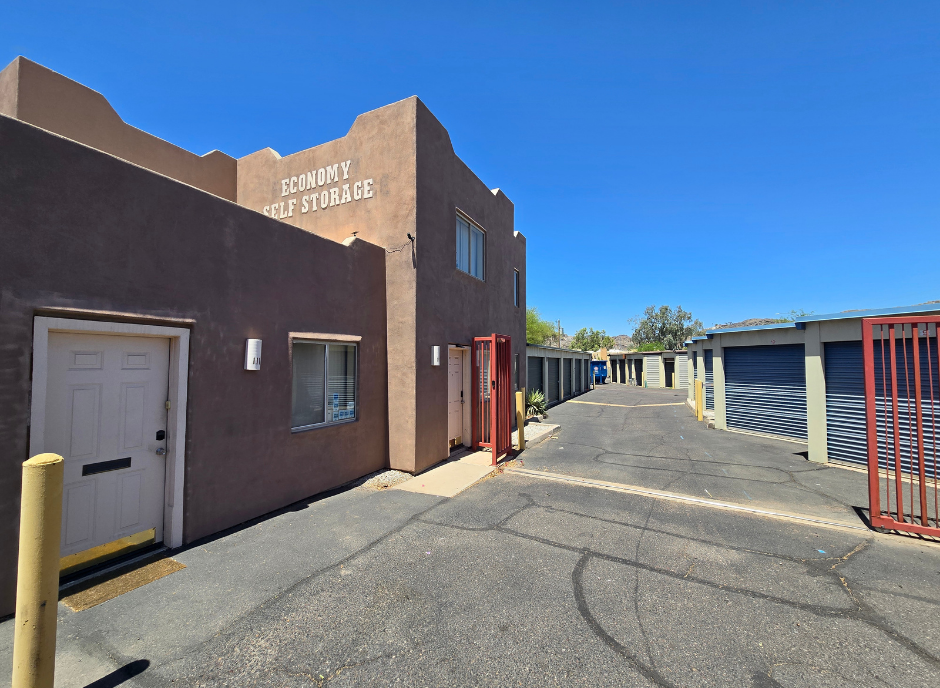

The pandemic normalized remote management across self-storage. Five years later, many operators still run properties with minimal or no on-site presence, banking on technology to bridge the gap. For some facilities, this model works cleanly. For others, it's quietly eroding NOI.
The uncomfortable truth: remote management's efficacy is highly specific to facility type, market maturity, and tenant profile. Applying it universally is a cost-cutting shortcut that reads like operational discipline.
Where Remote Works (and Why)
Stabilized, Climate-Controlled Urban Facilities
A mature 400-unit climate-controlled property in Phoenix with 95%+ occupancy, a professional tenant base (predominantly corporate and small business), and no significant vacancy pressure is a textbook case for remote-first operations.
Why it works:
For these properties, a remote model with a weekly or biweekly courtesy walk-through (contracted or part-time) and robust monitoring systems keeps labor costs competitive without sacrificing occupancy or collections.
Result: Cost savings stick. You're not leaving money on the table.
Newly Built Facilities (Lease-Up Phase)
Counterintuitive, but a brand-new facility during lease-up can actually benefit from a remote-hybrid model if management is disciplined and data-driven.
Why: Lease-up velocity is driven primarily by marketing spend, pricing strategy, and competitive positioning—not by whether a manager is on-site. In fact, on-site managers during lease-up often become trapped in reactive work (cleaning, small repairs) rather than strategic revenue management.
Remote lease-up management works when:
Result: Lease-up velocity improves. Cost structure is leaner from day one.
Where Remote Backfires
Non-Climate, Sub-80% Occupancy Properties
A 300-unit non-climate facility in an oversaturated market with 72% occupancy is the archetype of a remote management failure.
Why remote doesn't work:
Remote-managed properties in weak markets reliably underperform on two metrics: occupancy recovery and revenue per occupied unit. The difference is often 50–150 bps in cap rate compression—far exceeding the savings from eliminating an on-site manager.
Real scenario: A secondary-market non-climate property cuts an on-site manager (save $50K/year in salary + benefits). Occupancy drops from 78% to 71% over 8 months. Average rent declines 3% due to competitive pressure and poor renewal conversations. Result: $85K in lost annual revenue. The "savings" evaporated.
Mixed-Use or Tenant-Heavy Retail Components
Properties with retail, office, or frequent tenant service needs (boat/RV, vehicle storage with access friction, climate-controlled units for storage-intensive businesses) require on-site presence.
Why:
A remote model here reads as cost-cutting to tenants. Churn increases. Recovery becomes harder.
Properties in High-Theft or High-Delinquency Markets
Remote management in these environments is operationally naive.
Theft and casualty losses require visible presence, incident documentation, and tenant relations management. Delinquency requires active outreach and enforcement. Neither scales well through automated systems.
The Hidden Cost of Misapplied Remote Management
When remote doesn't fit the property, the cost shows up indirectly:
Exit multiples compress. The property that looked like a labor-cost savings opportunity now trades at a 25–50 bps cap rate disadvantage.
How to Know If Remote Is Right for Your Property
Ask these questions:
If your property is high-occupancy, stabilized, professional-tenant, and low-maintenance, remote can work. Otherwise, on-site management—or at least a meaningful hybrid with frequent on-site presence—is worth the cost.
The Pragmatic Hybrid
Many operators are finding success with a modified approach:
This model costs less than a full-time on-site manager, preserves the relationship-building and operational oversight that drive occupancy and revenue, and avoids the false economy of cutting to bare-bones remote.
The Bottom Line
Remote management is a valid operational choice for certain facilities. But it's not universally cheaper or smarter. Applying it to weak-market, high-friction, or tenant-reliant properties is confusing cost reduction with strategy. The market doesn't reward you for cutting labor; it rewards you for maintaining occupancy, collecting rent, and preserving unit condition.
Know your property type. Match your management structure to your operational reality. Then you'll know whether remote is a competitive advantage or a liability in disguise.
If you want to talk through your property, Connect with the Gorden Group