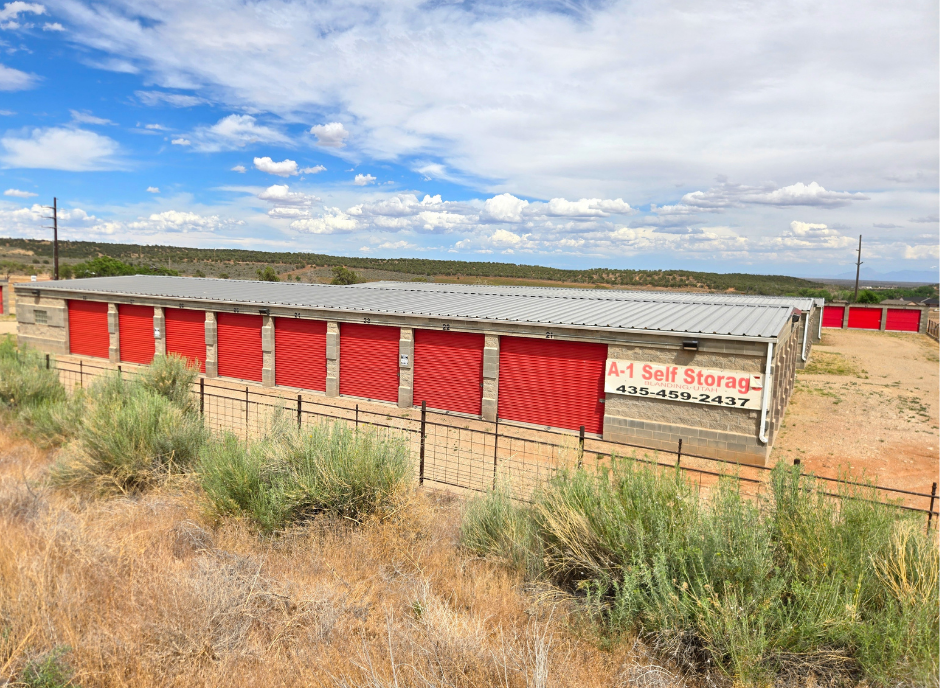

Every example in this post uses the same facility, so the numbers stay comparable.
Assumptions:
How cap rate works. A cap rate is NOI divided by price, so price = NOI / cap rate. At 7.0%, a buyer pays about 14.3 times NOI. A lower cap rate means a higher price. It is not your loan interest rate. Buyers use cap rate as a shortcut, but they price on the income they expect to earn. Experienced buyers rebuild revenue and expenses with their own numbers.
At those numbers the facility is worth $156,816 / 0.07 = about $2.24 million.
Owners know their facility better than anyone. But knowing a property and knowing what a buyer will pay are different things. Here are the myths we hear most.
A sale price is a starting point. It does not show what the other facility earned.
Take two facilities of the same size. One earns $156,816 NOI. Yours earns $132,000. At a 7.0% cap rate:
Same road, same size, about $355,000 apart.
A sale price also hides the buyer's situation, such as a tax-deferred exchange on a deadline, extra land in the deal, or a unit mix unlike yours.
The reality: Buyers price your income. Start with your numbers and use comps to check them.
Waiting for a lower cap rate is a bet that buyers will pay more per dollar of income later than they do now.
Your NOI is $156,816. Here is what the cap rate does to price:
Holding out for 6.5% instead of 7.0% is a bet on about $172,000 of extra price. If cap rates stay put or rise, you gain nothing and still pay the cost of waiting.
An owner who waits can also grow NOI, and a higher NOI raises value at any cap rate. That is a different plan from waiting on cap rates, and it only counts once buyers can see it in your records.
Waiting has other costs. New supply can open nearby. Insurance and property tax bills can rise and shrink NOI. Deferred repairs get more expensive.
The reality: You cannot control cap rates. You can control NOI and your timing.
Those are shorthand. Buyers use them to compare, but they pay for what is left after expenses, which is NOI.
Two 300-unit facilities, each grossing $285,120:
Same gross income. About $204,000 apart in value.
The reality: Revenue is where income starts. NOI sets the price. Know your NOI before you talk price.
Physical occupancy counts occupied units. Economic occupancy counts the rent you collect against the rent you could collect at current rates.
Potential rent at current rates: 33,000 sf x 12 x $0.80 = $316,800 a year.
The emptier facility collects $19,008 more a year. With equal expenses, that is worth about $272,000 at a 7.0% cap rate.
Occupied also does not mean paying. Unpaid rent cuts economic occupancy even when every unit is full.
The reality: Buyers pay for collected income, not full units. Raise rents on existing tenants on a regular schedule. We generally raise every 9 months, about 7% each time. In an oversupplied market, check your in-place rate against local street rates first, and slow or skip the increase for tenants already at or above street. Keep discounts and unpaid rent under control.
Expansion land, a climate-control conversion, and rents below market that could rise. Buyers see these as work and risk they take on. They plan to raise below-market rents themselves after closing, and they do not pay you for it.
Most buyers price in-place income. They may buy for what a property can become, but they rarely pay the seller full credit for it. Upside can bring more bidders.
The reality: To get paid for upside, build it into your results before you sell. Raise rates, add units, or tighten operations so at least 12 months of results show it. Or have your advisor present the upside so buyers compete over it. Expect that to move price at the margin.
Many owners run lean. They manage the site themselves and fix things themselves. Buyers underwrite their own operation, not yours. Owner-run numbers often leave out the owner's own pay, so the profit shown is not a true profit.
A buyer will usually adjust your expenses to include:
Math on the fee alone, at 6% of revenue. Say you report $173,923 of NOI with no management fee. At 6%, $285,120 x 6% = $17,107 comes off. A buyer sees $156,816. At a 7.0% cap rate that removes $17,107 / 0.07 = about $244,000 of value.
The reality: Know your adjusted NOI before a buyer calculates it for you. It protects your credibility and prevents price cuts late in the deal.
Most storage owners get letters and calls from buyers. Some offers look attractive.
One offer is one buyer with one agenda. That buyer faces no competition and may try to re-trade the price during due diligence. You never learn what other buyers would pay. In our sales work, your leverage is other qualified buyers.
The reality: Price is set when several qualified buyers compete in a structured process.
The costly mistakes happen before an owner talks to a buyer: waiting for a cap rate that may not come back, taking one offer as fair value, or showing an NOI that does not survive adjustment.
If you may sell in the next one to three years, learn your facility's real value now. That leaves time to fix what you can fix.
The Gorden Group advises self-storage owners across Arizona, Nevada, and Utah. Connect with the Gorden Group or request a property valuation.